THREE DAYS LOAFING ACROSS NOWHERE
Losing the where to preserve the why...

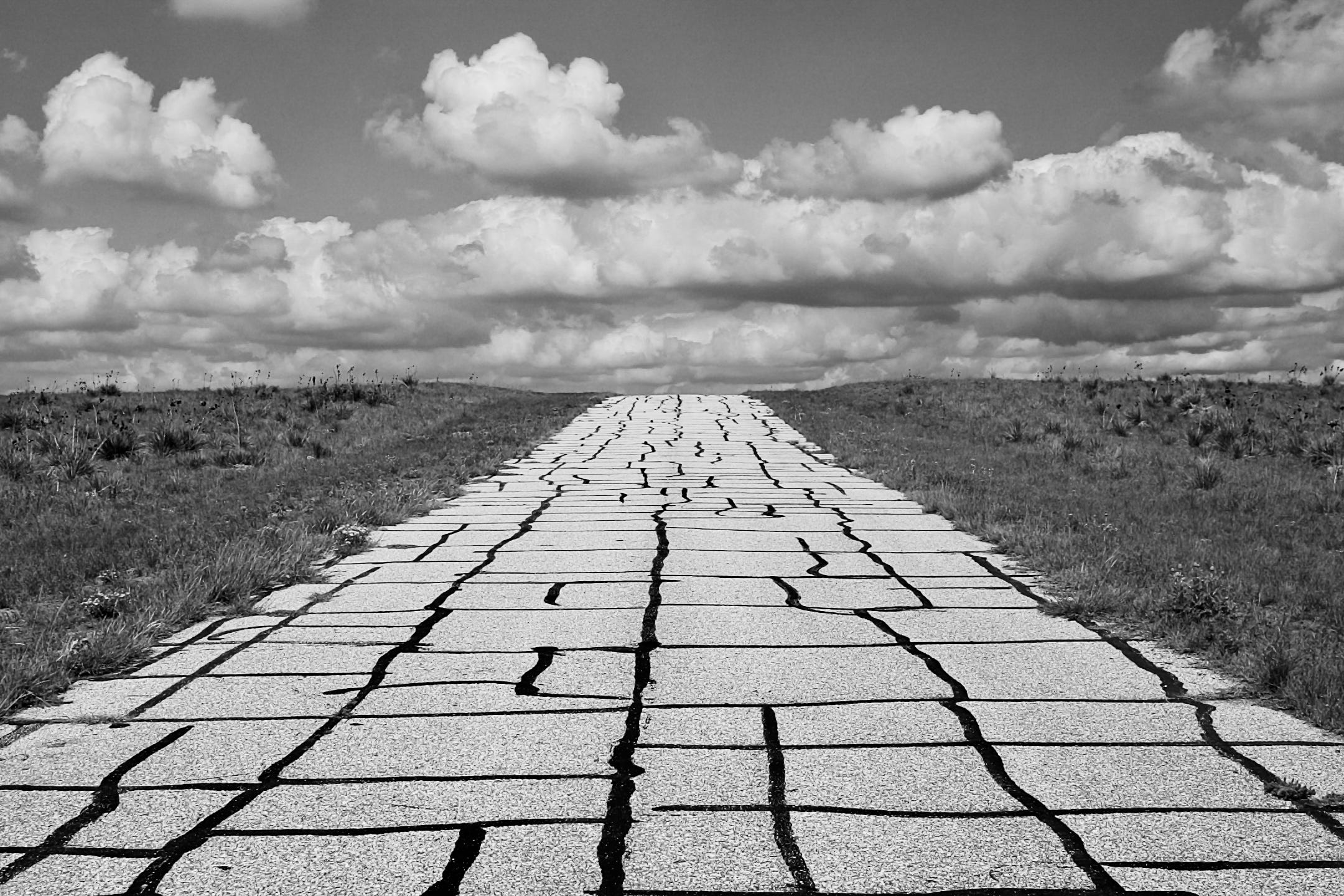
A few of you who know me personally know that in a former life I was a full-time writer and editor in the outdoor space. On the whole, I found a lot more to dislike than like about both the career and the industry which made that career possible (maybe that’s a future essay sometime…), and one of the most distasteful parts of the job involved “Highlighting public hunting opportunities.”
Or, as the more honest among us like to call it, hotspotting. Because that’s essentially what it is, regardless of whether you’re a member of the more traditional (whatever that really means anymore) media, TV personality, or just your garden-variety social media influencer.
Naming names and giving locations in pursuit of exposure, clicks, likes, views, reads, or whatever other metric of visibility and consumer consumption you chase is not a uniquely modern phenomenon, but the vastly expanded means, speed, and scope of conveying that information certainly is, and no matter how much those who engage in it deny it, it’s a problem. A big one (maybe there’s an essay there as well).
So when I left the industry, I told myself that I was done writing anything that required mentioning specific locations. I still had a few outstanding assignments, and the story below was one of the last ones I wrote about specific locations. It was a decent story, but it wasn’t a great story, because I don’t think you can write a truly great hunting story with destination/how-to as its main angle (your definition of great, of course, may differ significantly from mine…).
A few days ago I was pondering these things, so I dusted off this story to see what removing almost all mention of location turned it into. Would it make the story boring? Too vague? Confusing? Incomplete? What do you lose when you take location out of a story? What do you gain?
As the writer, what I gain, obviously, is anonymity for a place I cherish, and to not be shackled, creatively speaking, by “highlighting public hunting opportunity” that for damn sure does not need any more highlighting.
What the reader gains is up to them, but I believe the job of the writer who chooses to leave names and locations out of a story is to make the reader recognize their own secret places, their own stories. I’m not sure this one actually accomplishes that, not without a fundamental rewrite for the entire thing.
But I do know one thing: I like this version a whole lot more than the one that got published.
(And those of you who know the region can probably guess the place(s) in the story. But I can live with that…)
As geographical oddities go, it’s not much. On a map, this thin, remote, and sparsely-populated strip of land, a mere 34 miles north to south and 167 miles east to west, sits perched like a misplaced Tetris piece straddling the borders of four other states.
It is by any measure a lonely, harsh, and isolated region, but one full of history. The epicenter of the Dust Bowl occurred here. Before white settlement this land felt the thundering hoofbeats of countless millions of bison and the southern plains tribes that created entire cultures around them. It is a land full of ghosts, heartbreak, and imposing space.
But it is not all barren emptiness. And if you are a bird hunter, what you will discover out here is an opportunity to chase both bobwhite and scaled quail across a setting unlike any you will find elsewhere. And you’ll most likely do it alone, with just the wind, sun, and sky as your only company.
It’s not easy hunting, nor is it the most productive in terms of sheer bird numbers, but if you’re looking for solitude, and maybe a bird or two along the way, this sliver of the southern plains can provide both, for those willing to accept it on its own terms.
And that’s exactly what I needed. Some time spent following my dogs across that spare, astringent landscape, hunting public land and sleeping in a tent, seemed like a good way to recalibrate and renew my spirits.
Day One
My journey began at an historically imposing yet invisible barrier—the 100th Meridian. East of the 100th Meridian rainfall averages over 20 inches per year and the native landscape is characterized by a combination of short, mixed, and tallgrass plants. Beyond the meridian lies true shortgrass prairie where average rainfall drops below 20 inches a year. It’s a semi-arid transition zone that—depending on the whims of the weather gods—vacillates between drought, drought, more drought, and sometimes rain.
And rainfall is the one dominant factor influencing quail, quail numbers, and quail hunting in this country. Get rain at the right time, and you’ll have birds. Get rain at the wrong time—or don’t get rain at all—and you may find yourself hunting nothing more than memory.
Luckily, this past spring saw timely rains at the right time and, and I found myself heading to a piece of public land that is s diverse patchwork of native sand-sage prairie, mixed-grass uplands, and dense riverbottom. I had hunted it many times before and was looking forward to a return.
Unfortunately, I had brought weather with me. Or at least the wind.
And here is where I must mention one of the absolute constants about bird hunting on the southern plains: The wind, the ceaseless, often-howling wind. A calm day on the plains is a rarity. The wind always blows here. Always. There’s a reason it drove early settlers insane.
But if you wait for the wind to stop blowing here, you’ll never hunt, so the only thing to do is clear the dust from your eyes, your throat and your sand-blasted, wind-burnt, wind-chilled soul, pick up your shotgun, send the dogs, and go hunting.
And so that’s what I did. I managed to set up my tent on one of the designated camping areas, and, after making sure the tent wouldn’t sail away to Texas, I loaded up the dogs and went looking for a secret little draw I had found years ago, a long, meandering canyon covered in sand-sage, little bluestem, and sandplum thickets.
The draw offered no real respite from the wind, but I figured I might find a covey holed up in the midst of a thicket. As my oldest pointer, Abbey, worked the draw from side to side, I pondered the notion of “Gentleman Bob.”
I don’t know who first coined that phrase, but he obviously never ventured west of fairytale land. You will find no gentle or gentlemanly specimens of Colinus virginianus here, unless the birds you hunt began life in an incubator and are found behind a fence.
Western bobwhites out here on the edge of their range are tough. They have zero interest in accommodating cliched notions of what they should be and how they should act. What they do have is an abiding interest in living, and pretty much everything they do is geared toward continuing that. They are not going to wait for you to light a pipe, wax your beard, adjust your cravat, or strike the perfect Instagram pose.
As if to punctuate that notion, as I was waxing poetic about quail, Abbey went on a solid point in front of a small thicket in a finger draw ahead of me. As I started to walk in, a covey of bobs exploded, caught the wind and were instantly gone in the most ungentlemanly way possible as I shot two futile holes in the sky.
That night, the dogs and I huddled together in the tent and dreamed of calm days and willing birds as a prairie gale pushed against the canvas and tentpoles groaned.
Day Two
The next morning—as so often happens on the plains after a big blow—was as still and beautiful as a picture. I was tempted to stay and spend the morning hunting right from the tent, but I was worried the calm wouldn’t last, and at any rate I wanted to reach the next destination.
There is a place on the southern plains where, on published maps sits a blue dot denoting the presence of a lake. Trying to reconcile the maps with reality, however, is impossible.
Simply put, there’s no lake here.
All the trappings of a lake are present: massive dam, boat ramps, campgrounds, parking areas. It’s a veritable water wonderland — minus the water.
Theories abound on why the lake never filled up.
Whatever the reason, it now sits high, (mostly) dry, and lonely. Driving through it is an eerie experience. Campgrounds and parking lots sit abandoned and weed-choked. The ceaseless prairie wind moans through empty pavilions, empty picnic tables, empty restrooms.
About the only thing this place isn’t devoid of, however, is wildlife. However colossal a failure it may have been as a lake, it has turned into an oasis for wildlife, including quail.
It is a special place to me for many reasons. It was where, many years ago as a young, bird-crazy kid from downstate, I both saw and shot my first scaled quail. It was also my first glimpse at that true shortgrass prairie, where the feel of the high plains and near southwest mix into something gorgeous and lonesome; grass and cholla and prickly pear and the promise of tough dryland quail.
Since then I have gone back year after year, through good years and bad. You will never shoot huge numbers of quail here, and there are many years where you’ll not see scaled quail at all. This is the eastern fringe of scaled quail range, and their presence ebbs and flows according to yearly weather.
This year, however, I was feeling optimistic as I rolled into the area and made camp at one of the long-abandoned campgrounds. The reason for my optimism was twofold: One, we’d had good rains in the spring, and two, a birding friend had told me he’d seen a covey of blues on a birding trip earlier that summer.
There wasn’t another soul around as I pitched my tent next to a crumbling old concrete picnic table in one of the overgrown campgrounds. After a quick lunch, I loaded the dogs and eagerly went looking for birds.
And here is where I must mention that second constant of hunting certain parts of the southern plains Painful vegetation. There are very few places in this area where a dog can place its pad without encountering something sharp and painful. Sandburs are ubiquitous almost everywhere, and prickly pear, where it flourishes, can stop a dog in its tracks.
This place has a lot of both, and as someone familiar with the area, I should have known this. But, eager to get my young, big-running pointer Zuma, on birds, I slapped a collar on her and let her rip. And rip she did — for about 50 yards before coming to a screeching halt amidst a giant prickly pear patch hidden amongst the grass. Even tough-footed dogs need boots sometimes, and I felt bad that in my eagerness I had failed to recognize that.
A few minutes later and now properly shod, Zuma let fly across the prairie. Ten minutes later she came to a screeching halt in a large patch of fragrant sumac. This time the birds didn’t have the assistance of a 30mph tailwind and I managed to shoot a beautiful male bobwhite off the covey rise. It was a damn good start after the windstorm of the day before.
What followed was an absolutely delightful morning watching a young dog coming into her own. Zuma had finally started putting things together earlier that season in Montana, and witnessing her performance that morning reminded me of why a dog in motion on the prairie is the most beautiful poetry in all of hunting.
Day Three
West of there, in fact, west of everything out here, lies one of the least-traveled parts of the southern plains, a curious mix of Rocky Mountain foothills, near Southwest rimrock country, and southern plains shortgrass prairie.
And it is to these grasslands that I have now come on this last day of my three-day odyssey. It is the farthest west I can go hunting without buying another state’s license, and the last chance I have to hunt scaled quail on this trip.
Up until the 1930s these lands, at least in their present form, didn’t exist. They were individual homesteads, quarter and half-section dryland farms blown away and abandoned during the dustbowl years, then subsequently repurchased by the federal government.
The irony of the situation is that in the years since, the invention of center-pivot irrigation has transformed much of the surrounding area back into cropland, and the grasslands which were once farms are now isolated islands of native prairie in an ever-expanding sea of agriculture.
Since I’ve always preferred to find a nice isolated place and make my own camp far from the company of strangers, I knew from previous trips where I’d pitch my tent. It had been several years since I’d been to this spot, but when I pulled up it looked exactly the same. Since I had found several coveys of blues on that last trip, I took this as a hopeful sign.
After getting settled, I decided to hunt from camp that afternoon. Both dogs needed a good long run, so rather than hunt one dog at a time, I decided to run the two sisters together.
There is something inherently satisfying about simply walking out of camp and going hunting; no drive time, no roads, no interaction with the world at large. Just you, the dogs, and all that land and possibility stretched out before you.
And on this last day of my quick three-day trip to reacquaint myself once again with a region I fell in love with so many years ago, that was enough. It was a beautiful day, I was hunting across a starkly gorgeous landscape that I—as an American citizen—own, and I was in the company of my two favorite dogs in the world.
Realizing this, my need for a scaled quail melted away. From this point on, birds would only be a bonus, mere addendum to the joy and freedom of the experience itself.
Did I find birds? Did I finally get that blue? Maybe, maybe not. But I can say that looking back, that day spent in that lonely, quiet land remains one of my fondest memories from this past season.
And that’s all that matters, really, isn’t it?